
India – Netherlands
Drawing on 24 stakeholder interviews and desk research, this brief analyses the India-Netherlands migration skill corridor. The corridor – which emerged following the introduction of the Netherlands’ Highly Skilled Migrant…
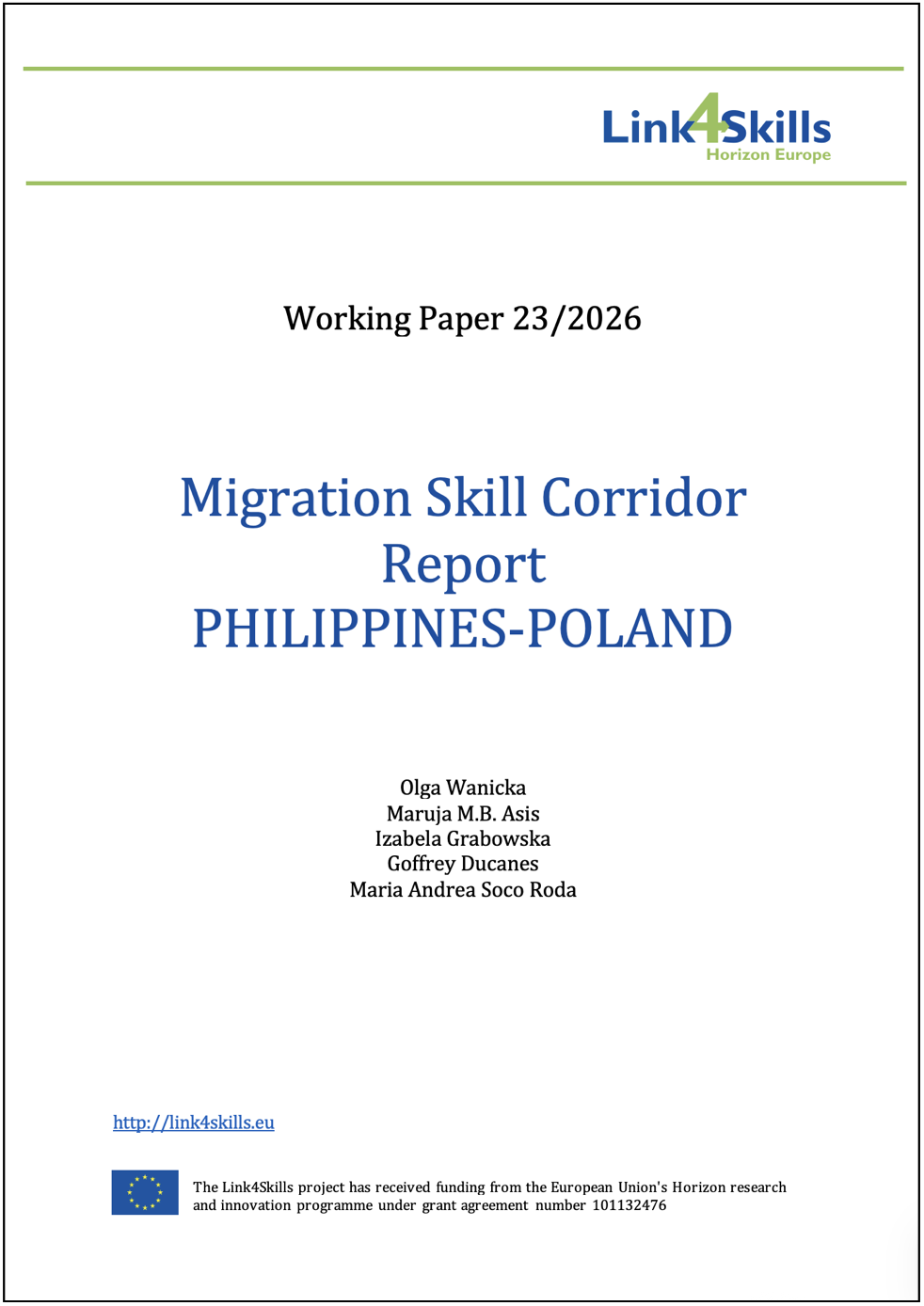
This brief examines the rapidly expanding Philippines–Poland migration skill corridor, which is driven by labour demand in sectors such as manufacturing, logistics, construction, and transport. It explores the corridor’s distinctive…
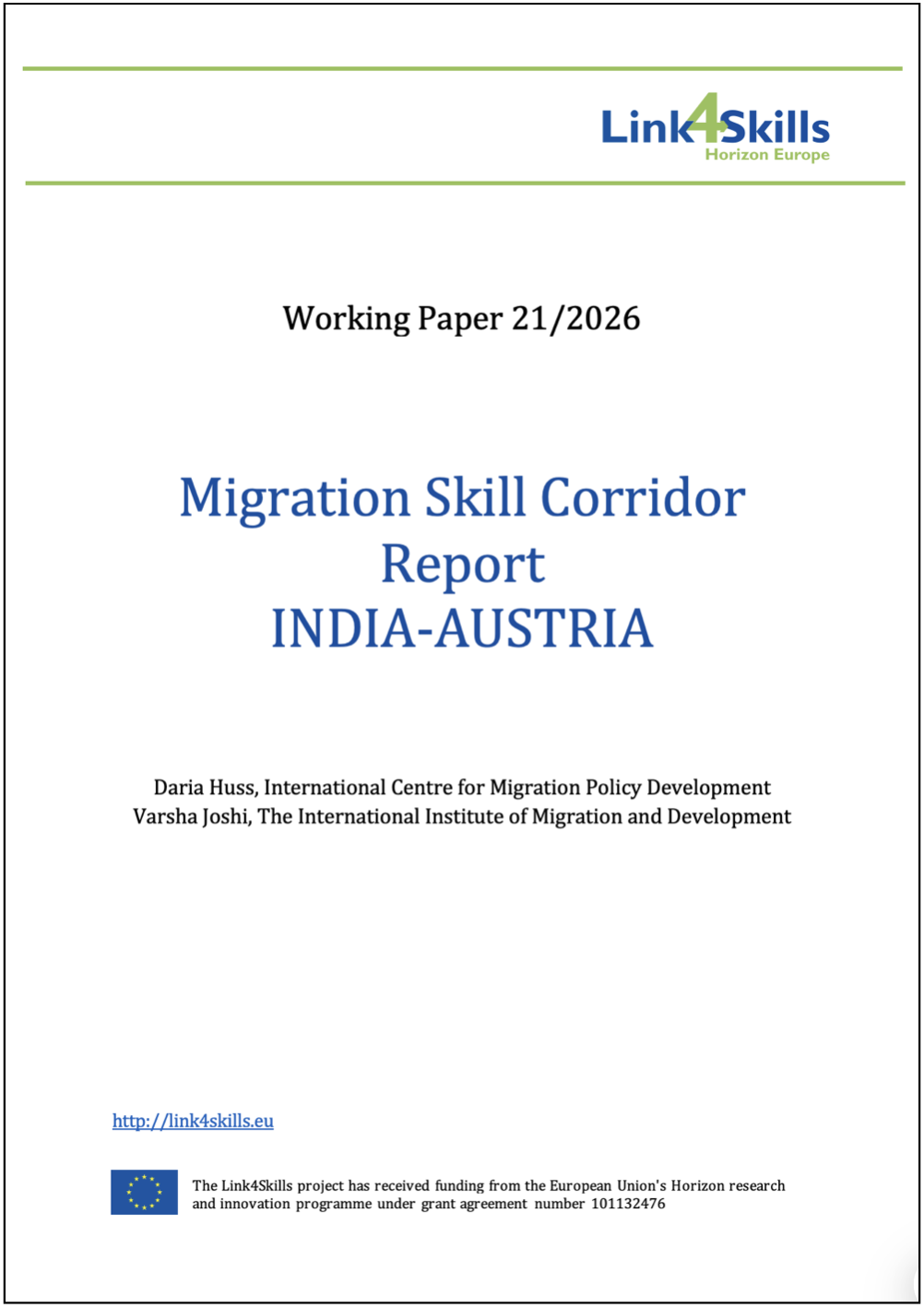
Focusing on skilled mobility in healthcare, STEM occupations, and higher education, this brief examines the emerging India-Austria migration skill corridor. It explores recruitment initiatives, qualification recognition, and the role of…
Descriptive Summary: Link4Skills Partnership Inventory The Link4Skills Partnership Inventory maps 156 Skills Mobility Partnerships (SMPs) involving L4S countries and EU-level initiatives between 2015 and 2025. Based on extensive desk research…
About the book This volume draws on extensive original data collected across the Link4Skills consortium and its sister Horizon Europe projects GS4S and Skills4Justice, spanning at least 15 countries of…
Results Overview Descriptive Summary: Link4Skills Migrant Survey Results Overview Why do people move? This working paper shares insights from the Link4Skills Migrant Survey, based on answers from more than 2,300…
Descriptive Summary: Ukraine–Netherlands Migration Skill Corridor: A Corridor Apart This working paper analyses the emerging Ukraine-Netherlands migration skill corridor, which expanded rapidly following Russia’s full-scale invasion of Ukraine in 2022.…
Descriptive Summary: Testing the Automation–Migration Interface This working paper introduces the Automation–Migration Interface Approach, a mechanism-based synthesis that updates dual labour market theory for the age of automation and artificial…
Descriptive summary: India–Netherlands Migration Skill Corridor: The Mouse and the Elephant This working paper analyses the India–Netherlands corridor as a predominantly highly skilled, private-sector-led migration pathway that expanded after the…
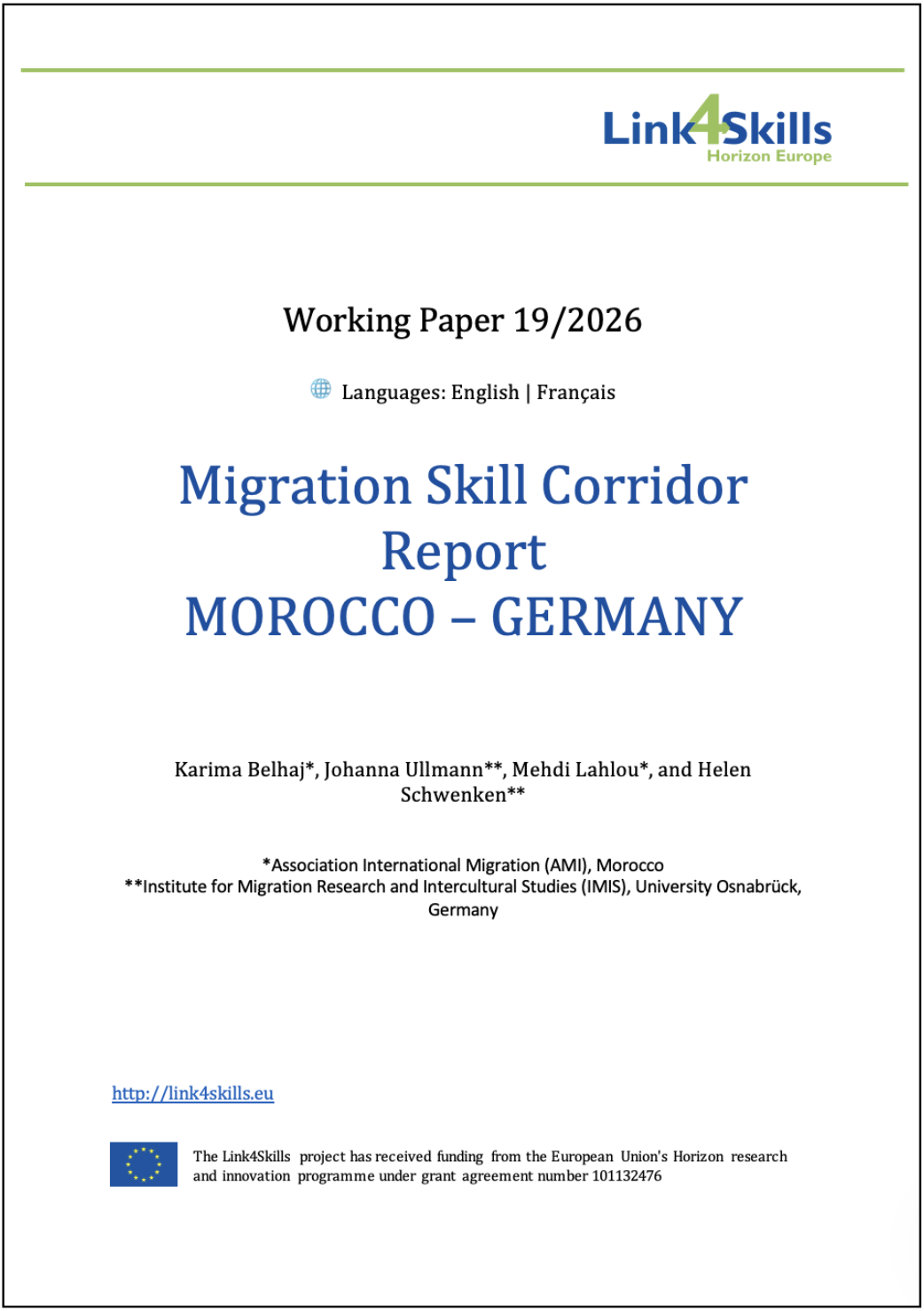
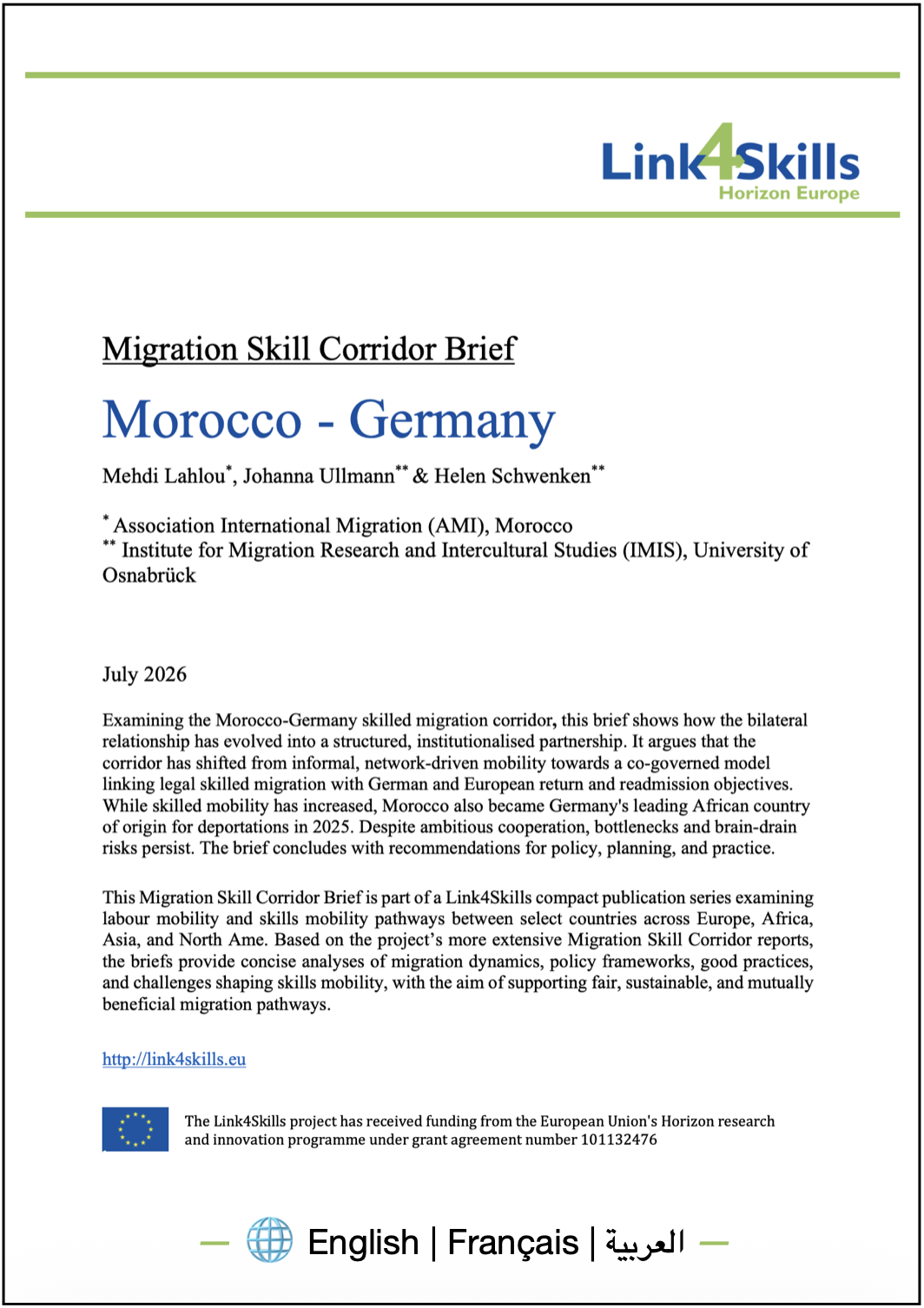
Descriptive Summary: Morocco–Netherlands Migration Skill Corridor: Echoes on the Highway This working paper examines the Morocco–Netherlands corridor as a post–guest worker migration pathway with deep historical roots but limited contemporary…
What is the Link4Skills project?
This two-minute video explains our purpose and approach
Link4Skills is an EU-funded research and innovation project seeking innovative, sustainable solutions to global skill shortages and mismatches.
Find out more here.
Origin:Â Ghana, India (Kerala, Punjab), Indonesia, Morocco, Nigeria, Philippines, Ukraine
Destination:Â Austria, Canada, Germany, Netherlands, Poland
Learn more here.
Labour market intelligence, predictive modelling, and problem-solving power in one place: the Link4Skills Navigator uses artificial intelligence to support policymaking for fair skill flows.
Learn more here.
Skill gaps can hinder growth. People must be equipped with skills that enable them to adapt to change and to utilize new technologies that support sustainable social and economic development. Link4Skills addresses these challenges on two levels: First by developing innovative methods for identifying skill shortages; and second by proposing practical policy solutions for skill shortages – solutions that ensure the flow of skills between markets is balanced, efficient, and fair.
- Izabela Grabowska, scientific coordinator, Link4Skills.
The L4S Navigator addresses skill gaps in three broad sectors:
At the heart of the project is the development of the Link4Skills Navigator, guided by the key principle of ensuring fair skill flows between sending and receiving countries.
Find out more here.
The “My Migration Dashboard” is a pioneering digital tool designed to collect and analyze data on the psychosocial capitals of both migrants and non-migrants.Â
Learn more here.
Migo is a chatbot developed to counter the spread of false and misleading information about migration across the European Union and Poland. It provides users with trustworthy, research-backed insights into migration-related topics using advanced large language models.
Learn more here.
The “My Migration Dashboard” is a pioneering digital tool designed to collect and analyze data on the psychosocial capitals of both migrants and non-migrants.Â
Learn more here.