





What is Link4Skills all about?
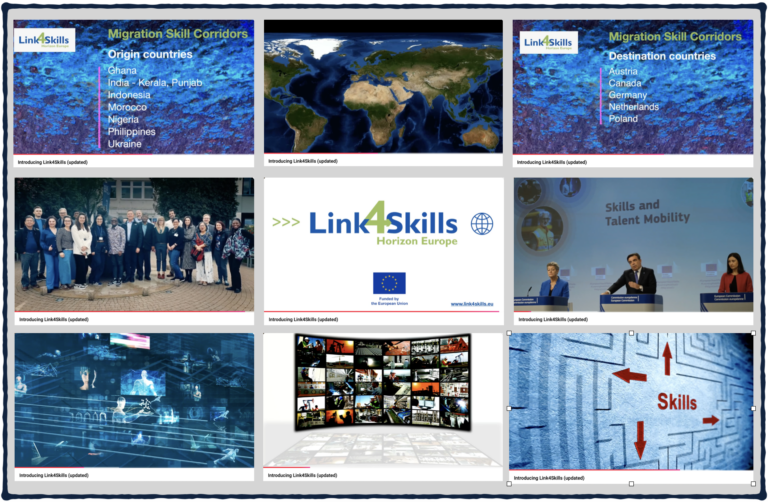
This two-minute video explains the project in a nutshell. It’s the fastest way to find out what our main goals are and how we aim to achieve them.
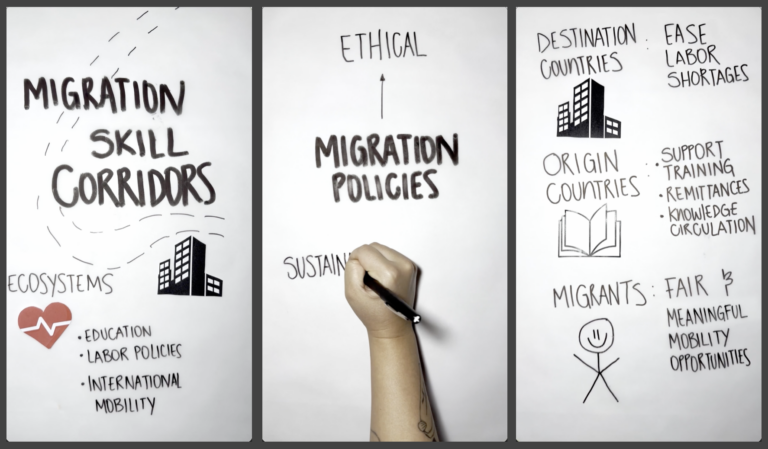
Winner of First Prize in the Migration Narratives Challenge at Toronto Metropolitan University, this animated explainer transforms Link4Skills research into an engaging, accessible story. Created by Vanessa Teran in collaboration with Link4Skills researcher Emma Bouillard.
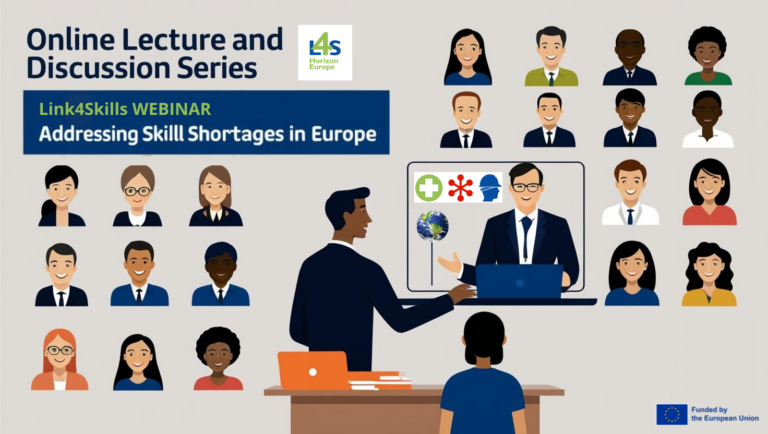
Dig deeper into the topics of labour migration, skills development, and AI-automation with our unique lecture and discussion series. Featuring cutting-edge insights from Link4Skills researchers and advisory board members. All videos are available on the Link4Skills YouTube channel.
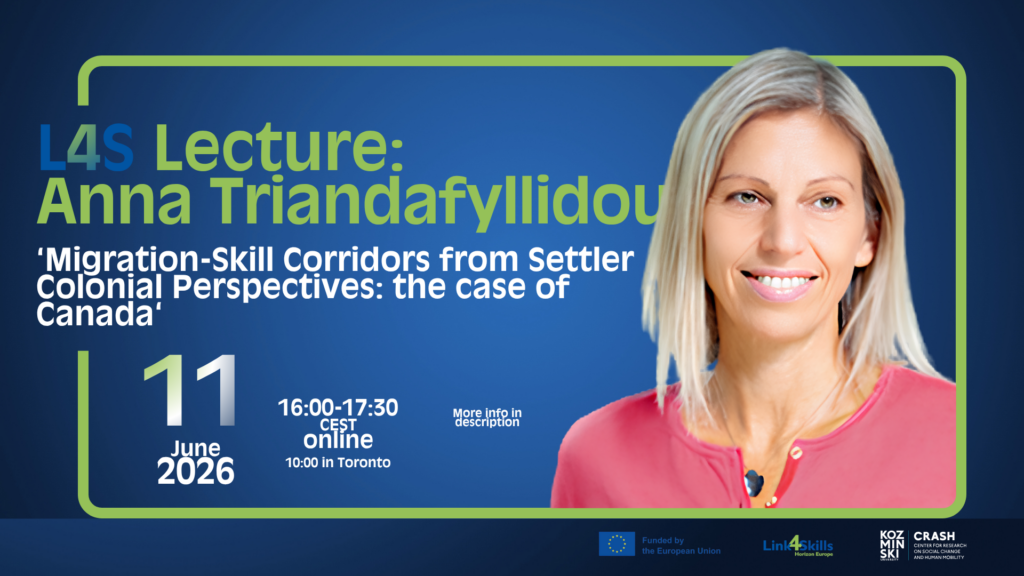
11 June, 2026
“Migration-Skill Corridors from Settler Colonial Perspectives: The Case of Canada”
– Prof. Anna Triandafyllidou
09 April, 2026
“Migration Skill Corridors: Opportunities and Limits for Labour Migration Policy”
– Prof. Godfried Engbersen
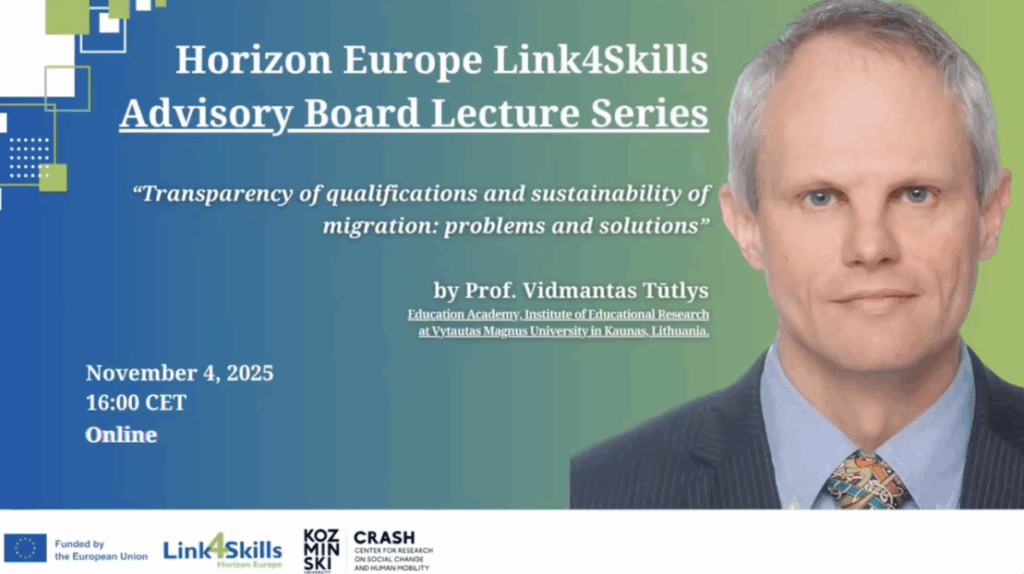
04 November, 2025
“Transparency of Qualifications and Sustainability of Migration: Problems and Solutions”
– Prof. Vidmantas Tūtlys
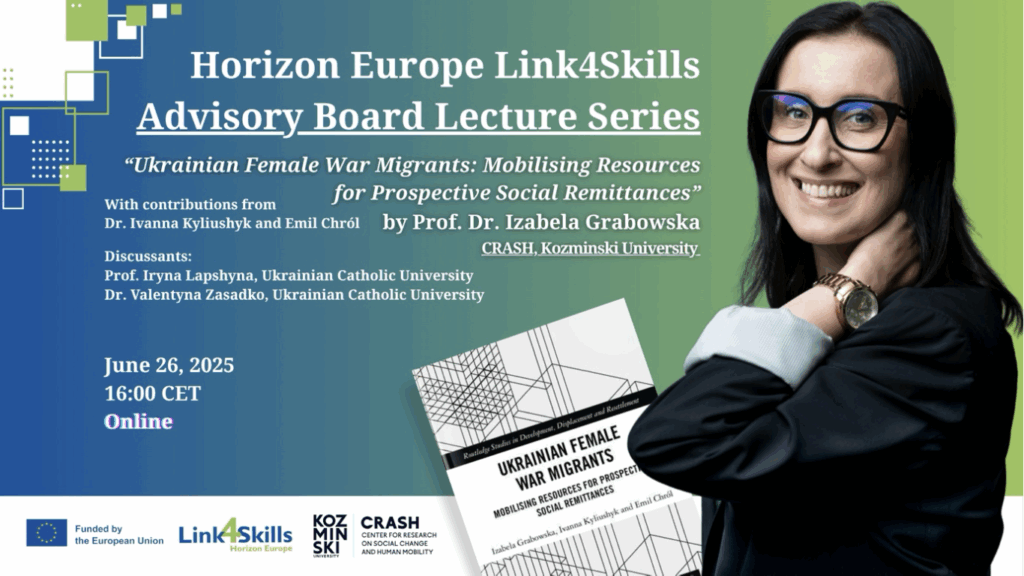
26 June, 2025
“Ukrainian Female War Migrants: Mobilising Resources for Prospective Social Remittances”
– Prof. Dr. Izabela Grabowska
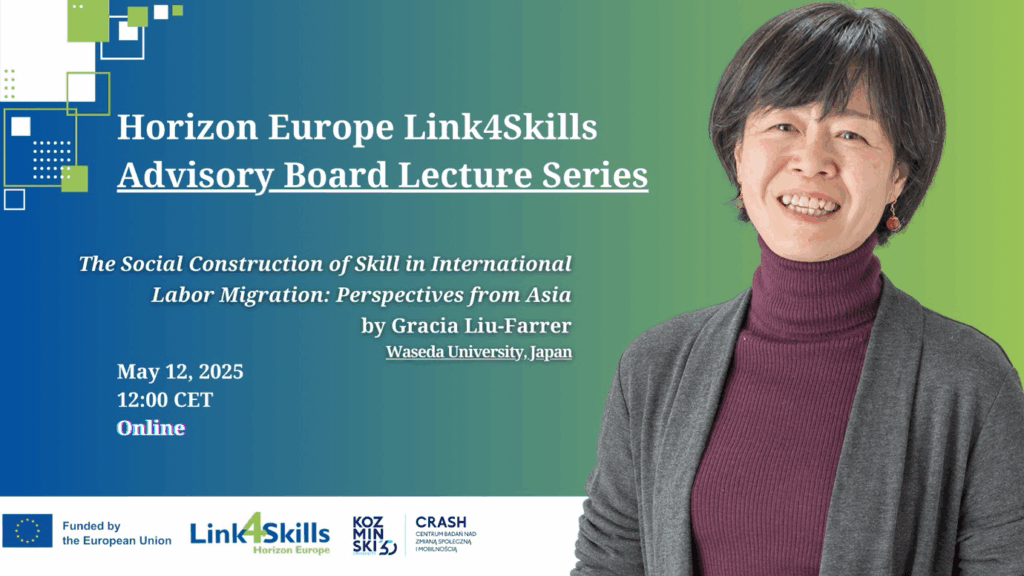
12 May, 2025
“The Social Construction of Skill in International Labor Migration: Perspectives from Asia”
– Prof. Gracia Liu-Farrer
25 March, 2025
“Labour Migration & Fair Recruitment for Decent Work: Addressing Irregular Migration”
– Charles Allan Kwenin
More info …
March 13, 2025
“Balanced labour migration. Targeted labour migration policy for general well-being”
– Prof. Dr. Monique Kremer
More info …
20 February, 2025
“Skills for Ageing Europe: Migrants? Robots? Other?”
– Prof. Dr. Jakub Bijak
More info …
L4S researchers talk about what they’re working on and why it matters.
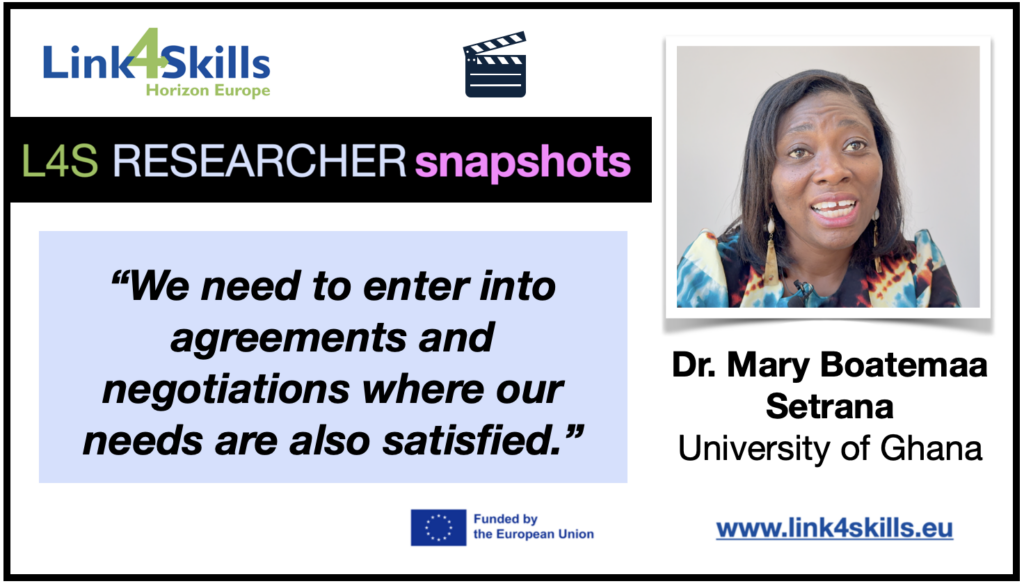
Link4Skills Ghana team lead Prof. Mary Boatemaa Setrana tells us what’s needed to achieve a “triple win” in labour migration and what that means specifically for Ghana.
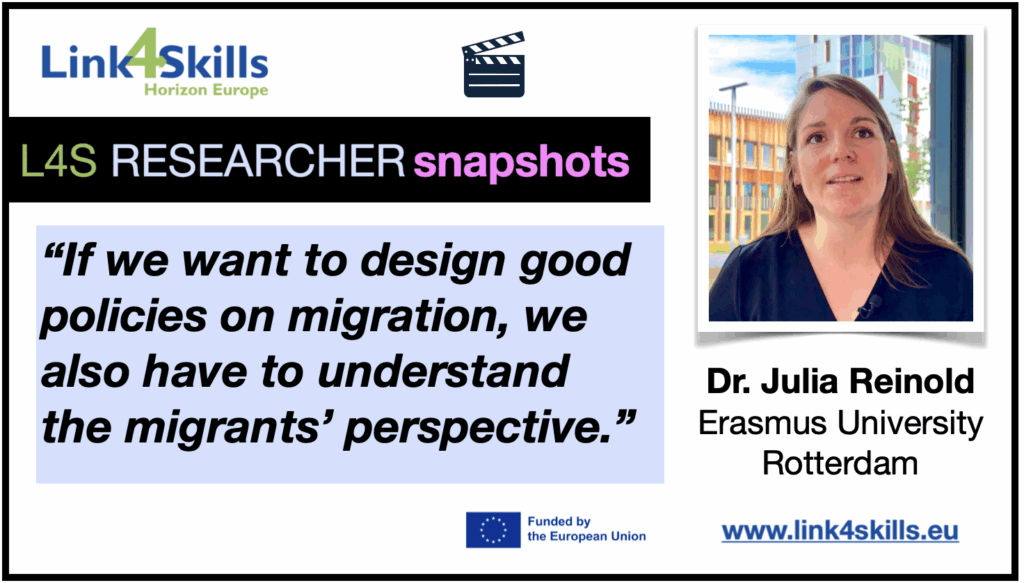
Dr. Julia Reinold, the driving force behind the Link4Skills Migrants’ Survey, explains the rationale behind the survey and what we hope to learn from it.
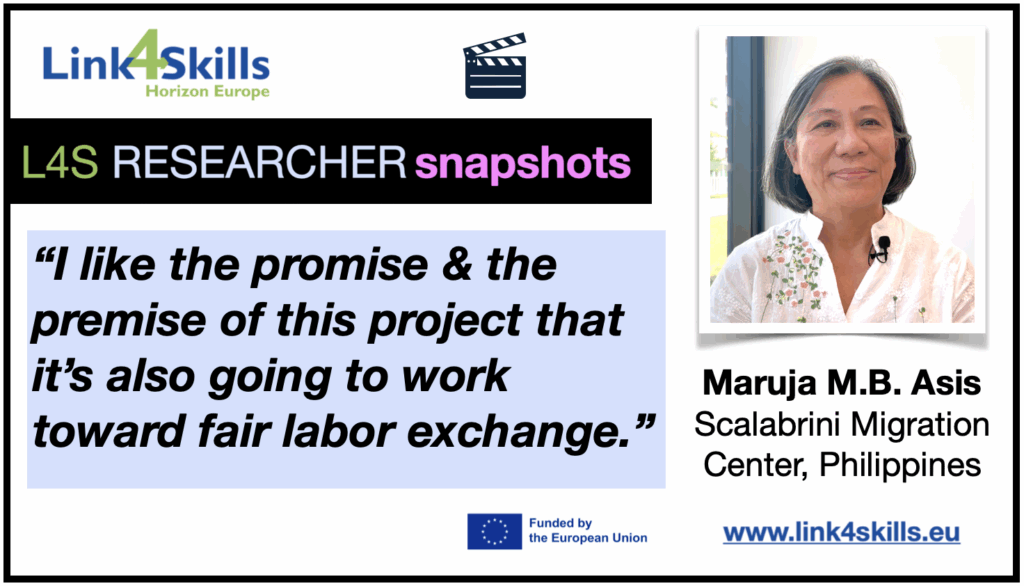
Link4Skills consortium member Dr. Maruja M.B. Asis highlights the importance of involving origin countries in skill migration research.
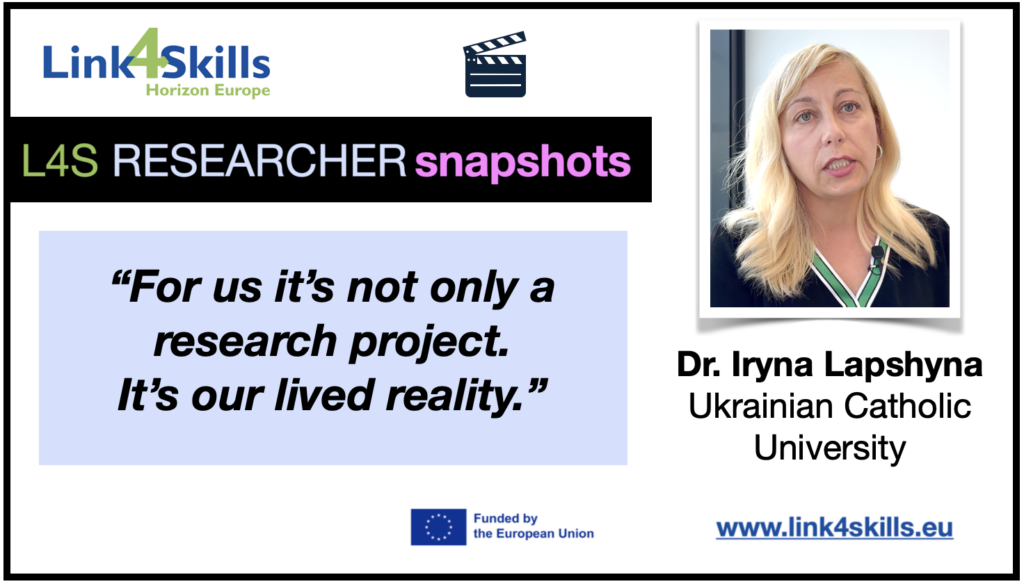
Dr. Iryna Lapshyna, who leads our team from Ukrainian Catholic University, describes what it’s like conducting research in a country at war.
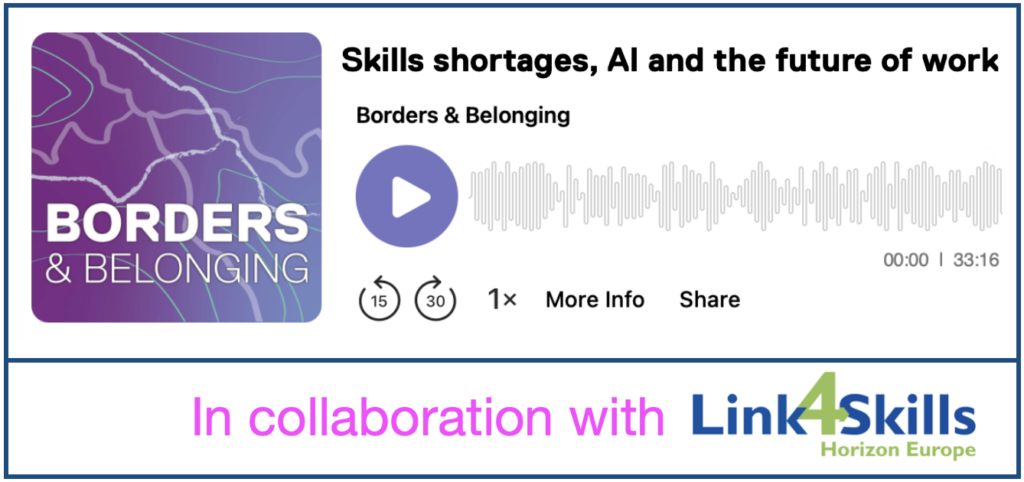
In collaboration with the award-winning podcast Borders & Belonging, Link4Skills is reaching out to listening audiences around the world, sharing insights from our continuing research into how cross-border migration can help address skill shortages. During this collaboration (scheduled through 2026), L4S consortium members will contribute to several episodes of the Borders & Belonging podcast. Our involvement in these episodes is made possible through cooperation with the Canada Excellence Research Chair in Migration and Integration at Toronto Metropolitan University, a Link4Skills project partner.
Skills shortages, AI and the future of work
Borders & Belonging | Season 3 | Episode 8
Al, aging populations, and the energy transition: how are these forces reshaping the job market and global migration? In this episode, distinguished guests walk us through how automation is transforming industries, influencing hiring, and impacting migrant workers. Are we creating new opportunities or just making it harder for them to find decent jobs?
Guests:
Alexandra Pregalinska, professor at Kozminski University, member of the Link4Skills project
Teseseltje De Lange, professor at Radboud University, principal investigator of the Global Strategy for Skills Migration and Development (GSS) project
Mateusz Zydek, Communication Team Lead at Randstad Polska
The Link4skills Navigator and Demographic modelling, feat. Sandra Leitner and Michaela Potančoková
Borders & Belonging | Season 4 | Episode 13
In this bonus episode, Sandra Leitner and Michaela Potančoková unpack the logic behind labour force modelling and what it reveals about Europe’s demographic and migration future.
Drawing on the Link4Skills Navigator, a tool built to map labour market data, skills partnerships, and demographic trends across countries, they discuss why migration is not a panacea for population aging, how Germany’s long-declining fertility rates are quietly driving one of the EU’s most urgent labour shortages, and why today’s migrant-sending countries like Poland and Romania will soon confront shortages of their own. The conversation also turns to the gap between research and policy, and why long-term evidence so often struggles to keep pace with short-term political cycles.
Guests:
Sandra Leitner, Senior Economist, Vienna Institute for International Economic Studies
Michaela Potančoková, Senior Research Scholar, International Institute for Applied Systems Analysis
Justyna Szalanska, Manager, Skills Alliance Poland.