


Working Papers

Descriptive summary:

India–Netherlands Migration Skill Corridor: The Mouse and the Elephant

This working paper analyses the India–Netherlands corridor as a predominantly highly skilled, private-sector-led migration pathway that expanded after the introduction of the Dutch knowledge migrant scheme in 2004.

India has become the Netherlands’ most important origin country for highly skilled migrants, particularly in IT and STEM sectors. Governance is largely demand-driven, with limited dedicated bilateral mobility agreements. While recruitment and labour market integration for highly skilled migrants are comparatively smooth, medium-skilled migration—especially in healthcare—faces barriers related to qualification recognition and language requirements. Recent years have seen a decline in knowledge migration alongside increased family migration, amid political debates on migration, tax incentives, and higher education funding.

The paper highlights implementation bottlenecks for employers, particularly SMEs, and calls for a more proactive skills strategy, stronger public–private coordination, and improved integration and retention frameworks.

 

Descriptive summary:

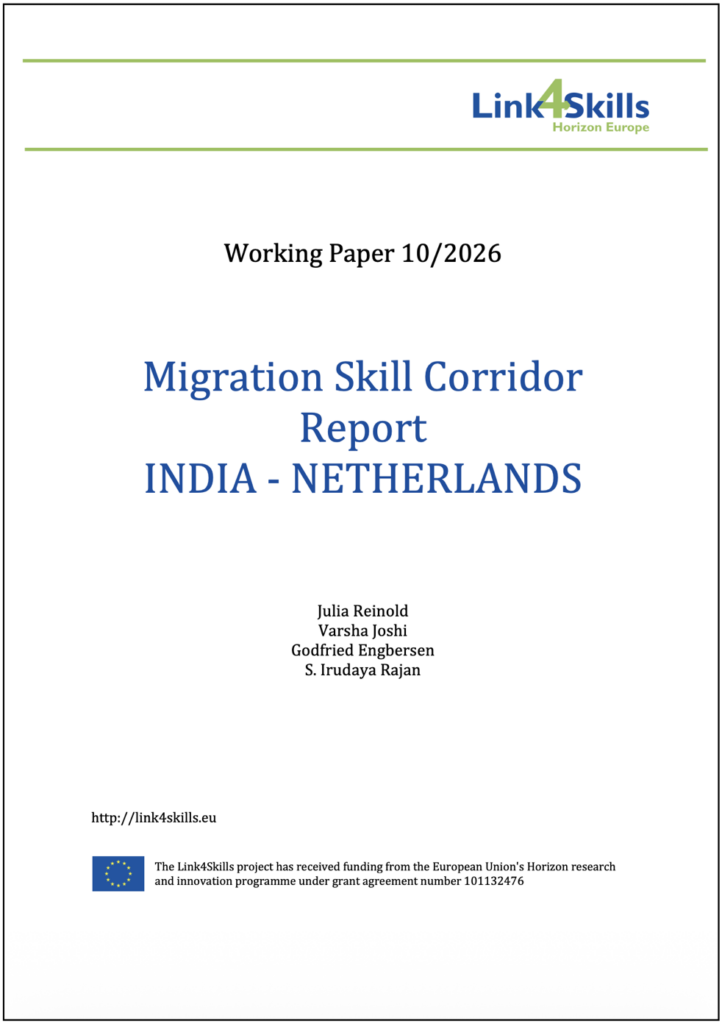
India–Netherlands Migration Skill Corridor: The Mouse and the Elephant

This working paper analyses the India–Netherlands corridor as a predominantly highly skilled, private-sector-led migration pathway that expanded after the introduction of the Dutch knowledge migrant scheme in 2004.

India has become the Netherlands’ most important origin country for highly skilled migrants, particularly in IT and STEM sectors. Governance is largely demand-driven, with limited dedicated bilateral mobility agreements. While recruitment and labour market integration for highly skilled migrants are comparatively smooth, medium-skilled migration—especially in healthcare—faces barriers related to qualification recognition and language requirements. Recent years have seen a decline in knowledge migration alongside increased family migration, amid political debates on migration, tax incentives, and higher education funding.

The paper highlights implementation bottlenecks for employers, particularly SMEs, and calls for a more proactive skills strategy, stronger public–private coordination, and improved integration and retention frameworks.

Â