


Working Papers

Ukraine–Netherlands Migration Skill Corridor

Descriptive Summary:

Ukraine–Netherlands Migration Skill Corridor: A Corridor Apart

This working paper analyses the emerging Ukraine-Netherlands migration skill corridor, which expanded rapidly following Russia’s full-scale invasion of Ukraine in 2022. Drawing on 26 stakeholder interviews and supporting data, the study classifies the corridor as a humanitarian and ad hoc migration pathway shaped by the EU Temporary Protection Directive, which granted Ukrainians immediate access to the Dutch labour market.

While employment rates among Ukrainians are relatively high, many experience deskilling due to slow recognition of qualifications, language barriers, and sectoral mismatches, reinforced by a “work-first” policy approach and uncertainty about the duration of stay. Governance of the corridor remains fragmented, with municipalities, national institutions, recruitment agencies, and civil society playing key roles in facilitating labour market entry and integration.

The paper highlights a central paradox: strong employer demand and societal support coexist with limited long-term policy commitment, leaving much of Ukrainians’ skill potential underutilised despite persistent labour shortages in the Netherlands.
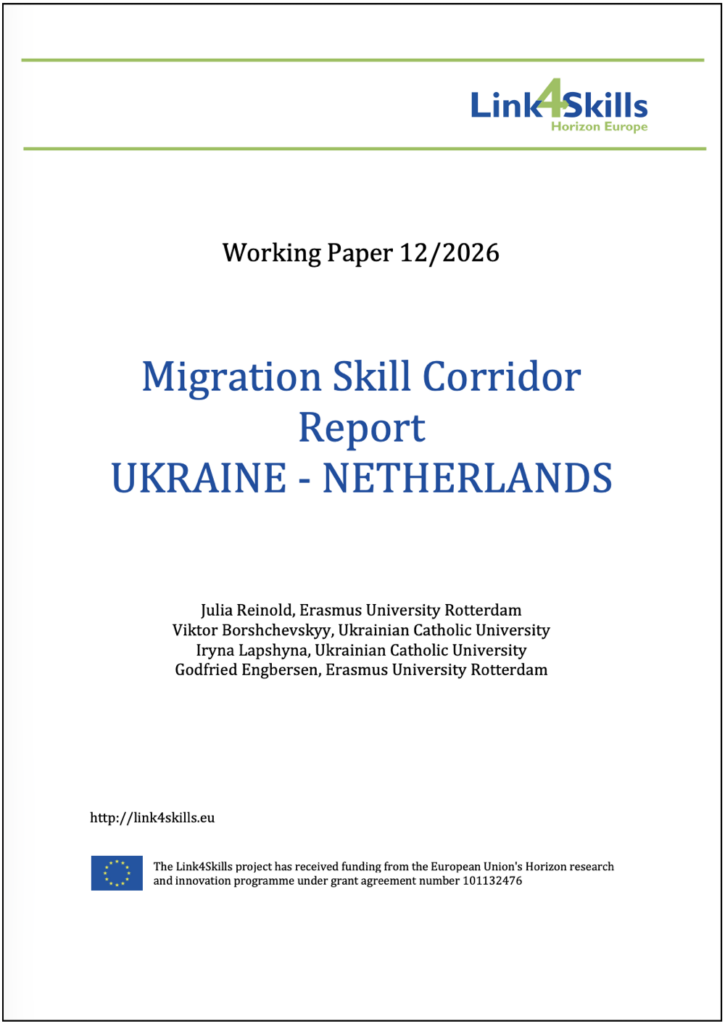

Ukraine–Netherlands Migration Skill Corridor

Descriptive Summary:

Ukraine–Netherlands Migration Skill Corridor: A Corridor Apart

This working paper analyses the emerging Ukraine-Netherlands migration skill corridor, which expanded rapidly following Russia’s full-scale invasion of Ukraine in 2022. Drawing on 26 stakeholder interviews and supporting data, the study classifies the corridor as a humanitarian and ad hoc migration pathway shaped by the EU Temporary Protection Directive, which granted Ukrainians immediate access to the Dutch labour market.

While employment rates among Ukrainians are relatively high, many experience deskilling due to slow recognition of qualifications, language barriers, and sectoral mismatches, reinforced by a “work-first” policy approach and uncertainty about the duration of stay. Governance of the corridor remains fragmented, with municipalities, national institutions, recruitment agencies, and civil society playing key roles in facilitating labour market entry and integration.

The paper highlights a central paradox: strong employer demand and societal support coexist with limited long-term policy commitment, leaving much of Ukrainians’ skill potential underutilised despite persistent labour shortages in the Netherlands.