
Policy Toolkit
Europe’s changing demographics – along with the green and digital transitions – are reshaping labour markets and creating new challenges for skills development and workforce planning.
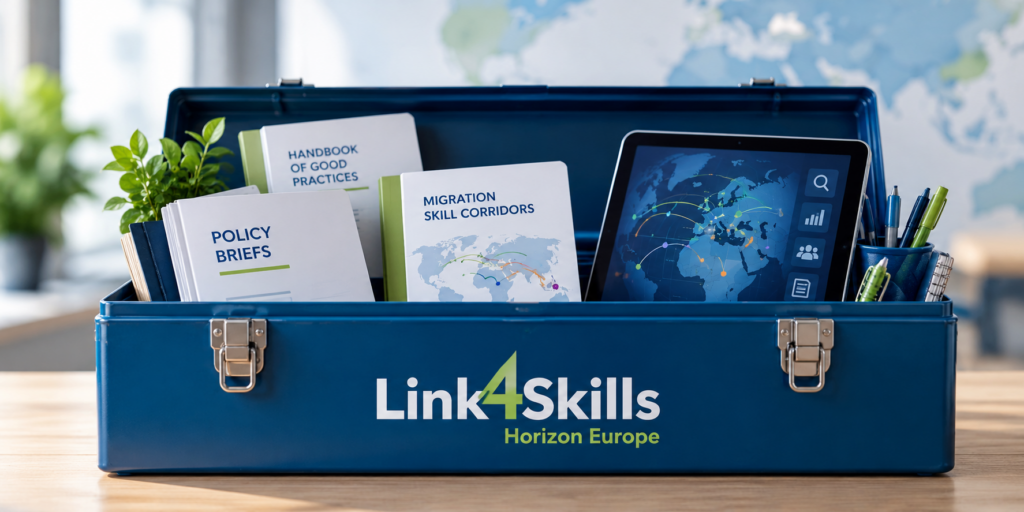
The Link4Skills Policy Toolkit brings together research findings, policy recommendations, practical guidance and interactive resources to help policymakers and practitioners respond to these challenges.
From understanding migration and skills dynamics to designing effective international partnerships, the toolkit supports evidence-based approaches that combine Europe’s labour market needs with opportunities for skills development and fair, mutually beneficial mobility.
Explore the four complementary resources below to inform policy development, international cooperation and implementation.
Handbook of Good Practices
Learning from experience
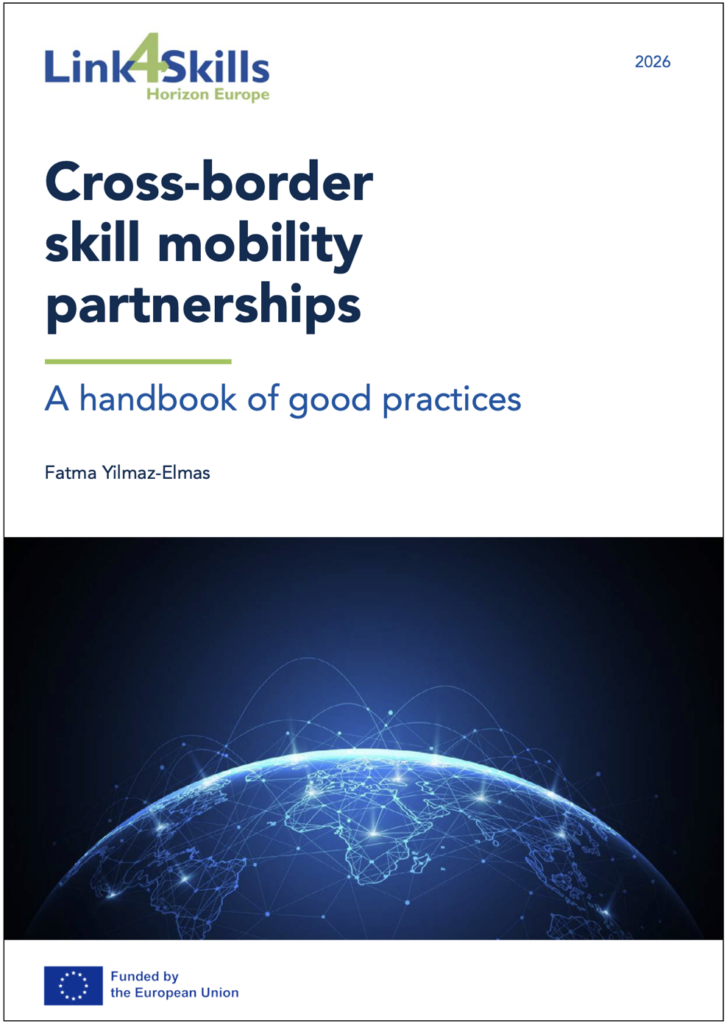
Cross-border Skill Mobility Partnerships: A Handbook of Good Practices examines international initiatives that offer practical lessons for designing and implementing skills mobility partnerships.
Drawing on eight programmes and partnerships, the handbook identifies transferable approaches, implementation challenges and lessons learned. It provides practical guidance for policymakers and practitioners seeking to develop effective, sustainable and mutually beneficial partnerships.
Policy Briefs
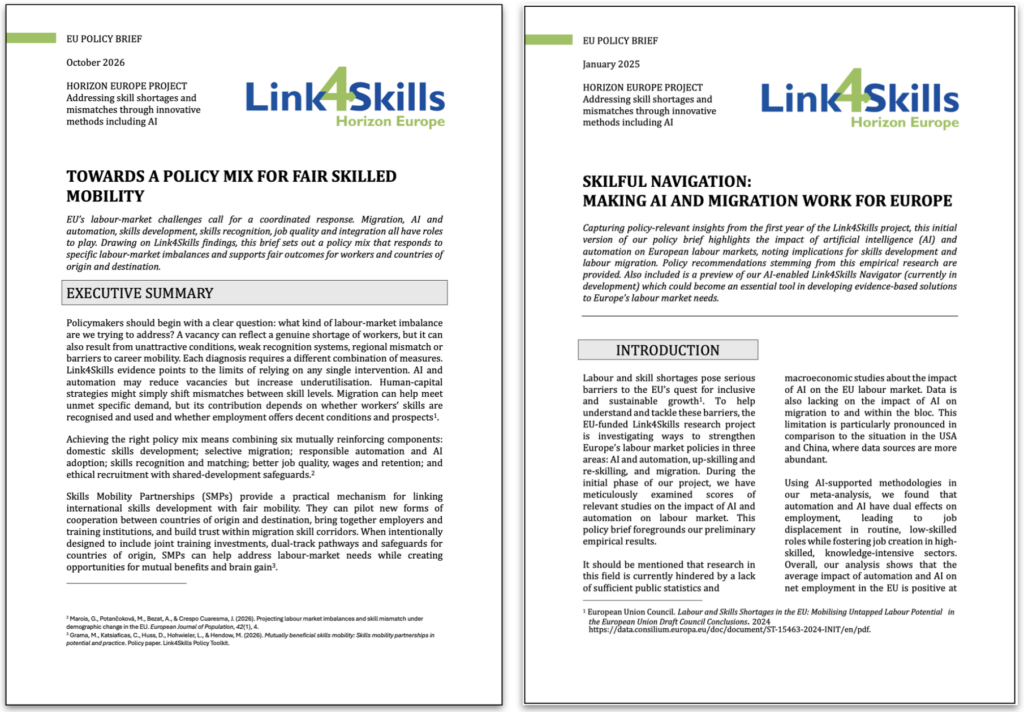
Research findings translated into policy recommendations
The Link4Skills Policy Briefs distil the project’s research into accessible findings and recommendations for policymakers.
They examine Europe’s evolving skills needs and the role of international labour mobility alongside skills development, reskilling and technological change. Together, they provide a strategic perspective on how policy can respond to labour market imbalances while supporting fair and sustainable international cooperation.
Migration Skill Corridor Briefs
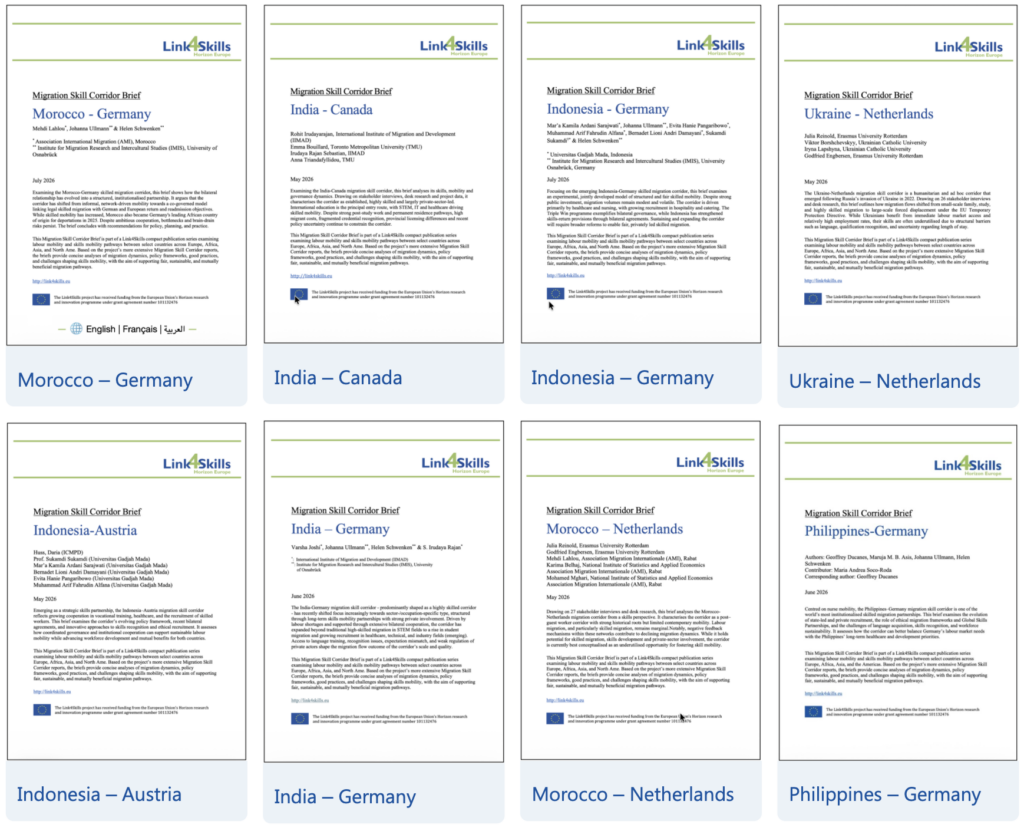
Understanding the dynamics between countries
The Migration Skill Corridor Briefs examine established and emerging pathways for skilled migration between specific countries of origin and destination.
Drawing on research across Europe, Africa, Asia and North America, they explore migration trends, institutional frameworks, cooperation mechanisms and persistent challenges. They help policymakers assess opportunities for cooperation that reflect the distinct economic, social and institutional circumstances of each migration corridor.
Link4Skills Navigator
Explore the evidence. Inform policy decisions.
The Link4Skills Navigator provides an interactive gateway to the project’s research, data and analytical resources.
Through migration corridor maps, labour market dashboards, comparison tools and the MIRA chatbot, users can explore skills needs, migration dynamics and opportunities for international cooperation. The Navigator also provides access to the toolkit’s policy resources, connecting research findings and practical guidance with the evidence needed to support informed decision-making.