
Handbook

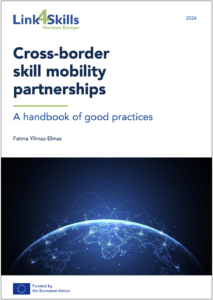
Cross-border skill mobility partnerships: A handbook of good practices

Building fairer skill mobility partnerships starts with learning from practice.

This handbook of good practices, explores how partnerships can connect skills development with fairer, mutually beneficial labour mobility.

Developed within the EU-funded Link4Skills project, the handbook draws on a mapping of more than 150 skills mobility partnerships and related initiatives. It examines eight illustrative cases, including THAMM/THAMM Plus, PAM, HabiZu, Triple Win, the Korean Employment Permit System, Digital Explorers – Iraq Edition, Hand in Hand International Talents, and GSP Soins.

Across these examples, the handbook identifies practical approaches to aligning training with labour market needs, recognising qualifications, engaging employers, and supporting workers before departure and after arrival. It also explores flexible mobility pathways, digital and remote opportunities, and the potential to widen participation among groups often overlooked in skilled migration policies.

Rather than ranking programmes or presenting a universal blueprint, the publication highlights transferable design features alongside implementation challenges. It considers gaps in return and reintegration support, the limited scale of many initiatives, and the need to include displaced talent. Emerging approaches are distinguished from established experience.

The handbook concludes with recommendations for mapping migration corridors, strengthening collaborative governance, embedding skills development and recognition, supporting the whole mobility cycle, and making inclusion a design principle.

Written for policymakers, practitioners, employers, training providers, and researchers, it offers a resource for designing and adapting partnerships that respond to institutional settings while advancing fairer opportunities for people and sustainable skills systems across borders.
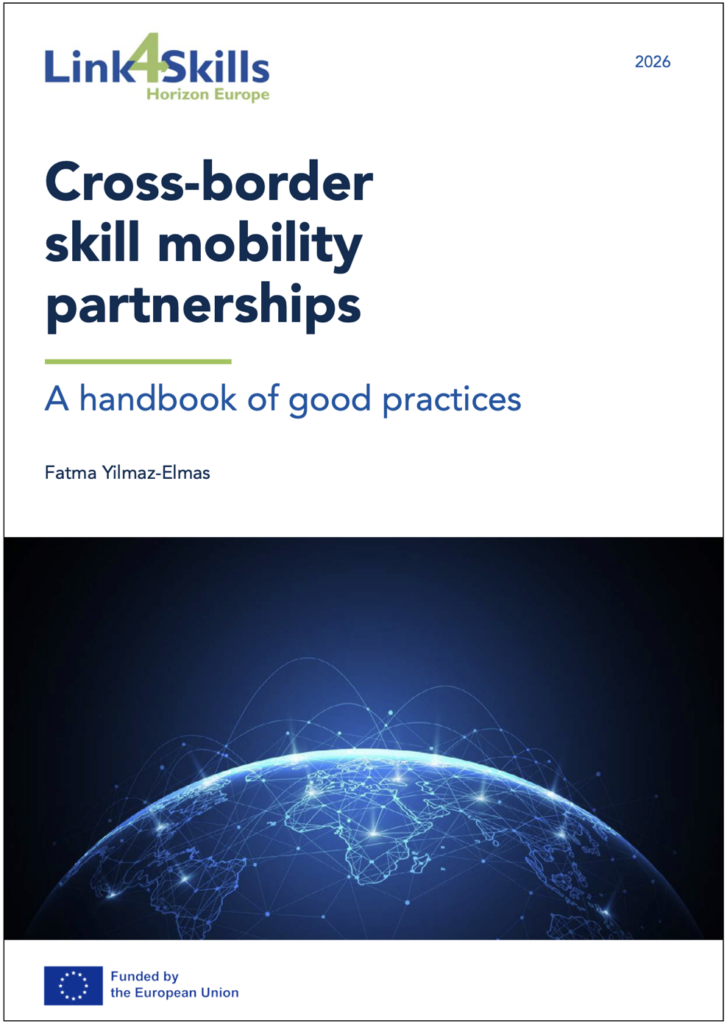
Cross-border skill mobility partnerships: A handbook of good practices

Building fairer skill mobility partnerships starts with learning from practice.

This handbook of good practices, explores how partnerships can connect skills development with fairer, mutually beneficial labour mobility.

Developed within the EU-funded Link4Skills project, the handbook draws on a mapping of more than 150 skills mobility partnerships and related initiatives. It examines eight illustrative cases, including THAMM/THAMM Plus, PAM, HabiZu, Triple Win, the Korean Employment Permit System, Digital Explorers – Iraq Edition, Hand in Hand International Talents, and GSP Soins.

Across these examples, the handbook identifies practical approaches to aligning training with labour market needs, recognising qualifications, engaging employers, and supporting workers before departure and after arrival. It also explores flexible mobility pathways, digital and remote opportunities, and the potential to widen participation among groups often overlooked in skilled migration policies.

Rather than ranking programmes or presenting a universal blueprint, the publication highlights transferable design features alongside implementation challenges. It considers gaps in return and reintegration support, the limited scale of many initiatives, and the need to include displaced talent. Emerging approaches are distinguished from established experience.

The handbook concludes with recommendations for mapping migration corridors, strengthening collaborative governance, embedding skills development and recognition, supporting the whole mobility cycle, and making inclusion a design principle.

Written for policymakers, practitioners, employers, training providers, and researchers, it offers a resource for designing and adapting partnerships that respond to institutional settings while advancing fairer opportunities for people and sustainable skills systems across borders.