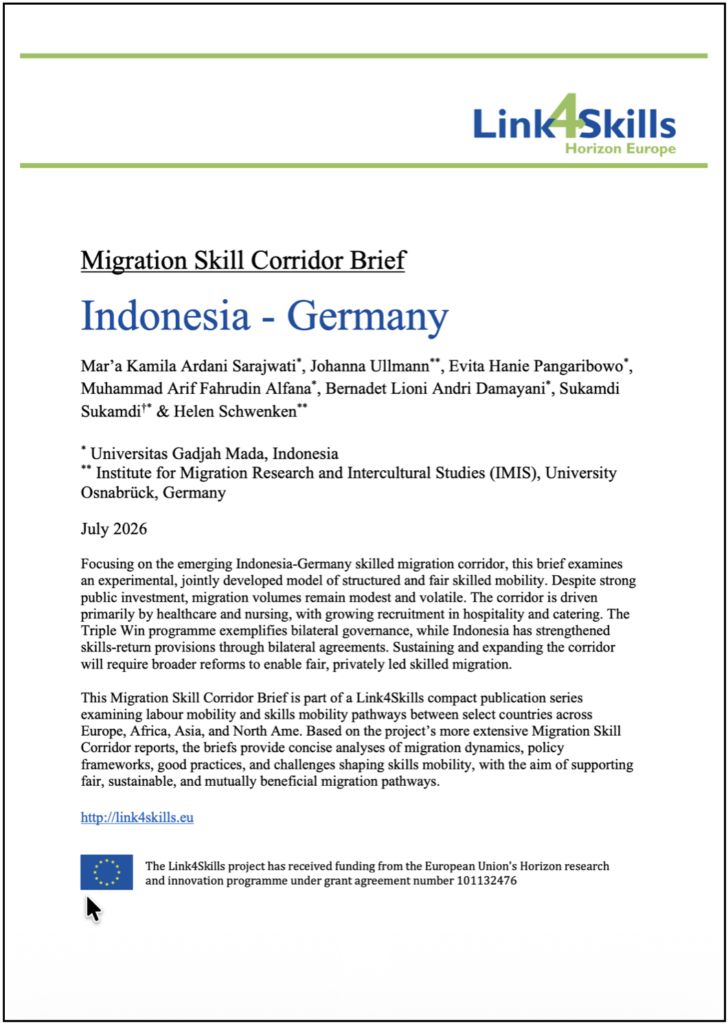


Focusing on the emerging Indonesia-Germany skilled migration corridor, this brief examines an experimental, jointly developed model of structured and fair skilled mobility. Despite strong public investment, migration volumes remain modest and volatile. The corridor is driven primarily by healthcare and nursing, with growing recruitment in hospitality and catering. The Triple Win programme exemplifies bilateral governance, while Indonesia has strengthened skills-return provisions through bilateral agreements. Sustaining and expanding the corridor will require broader reforms to enable fair, privately led skilled migration.