


Working Papers

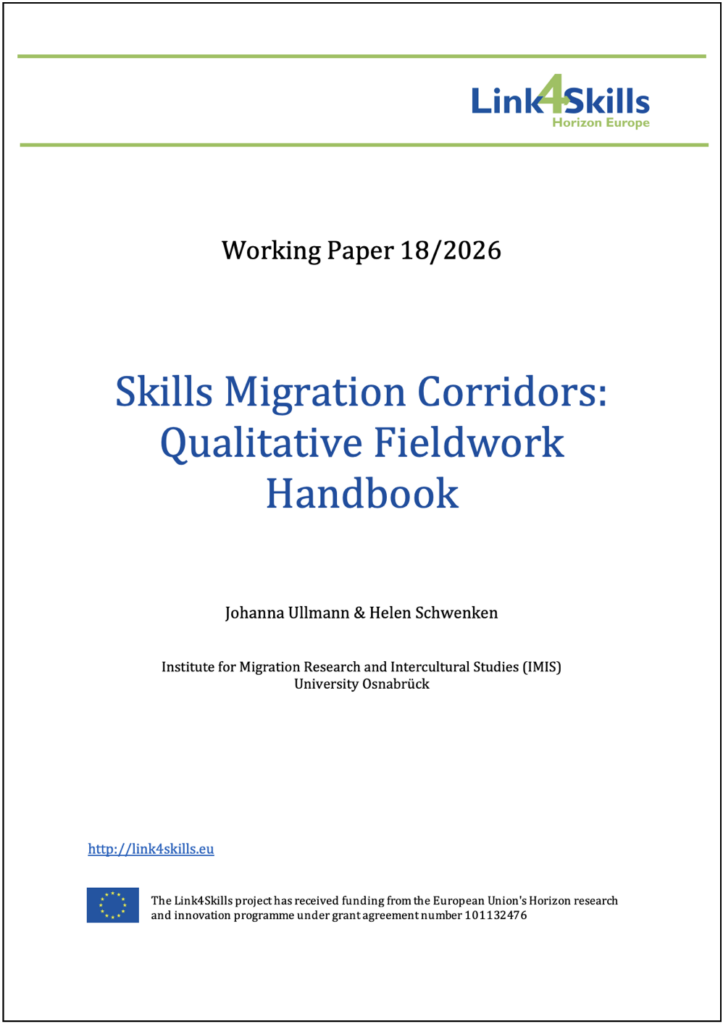
Skills Migration Corridors: Qualitative Fieldwork Handbook

Skills Migration Corridors: Qualitative Fieldwork Handbook

This handbook sets out the methodological framework used for Link4Skills’ qualitative research on migration skill corridors. Developed to ensure consistent research and ethical standards across an international consortium, it guided the study of 14 migration corridors and has been revised to serve as a resource for future research projects.

At its core is the Link4Skills migration corridor approach, which examines skilled migration simultaneously from origin and destination perspectives. Researchers worked in cross-country “corridor research tandems”, combining policy analysis with interviews and migrant perspectives to understand not only formal agreements and programmes, but how migration policies and skills mobility partnerships actually function in practice.

The handbook covers research design, corridor and participant selection, qualitative interviewing, focus groups, informed consent, research ethics, transcription, anonymisation and data management. It distinguishes between policy-makers, practitioners, experts and skilled migrants, with particular emphasis on capturing the practical implementation of migration policies through public, private and civil-society actors.

Alongside methodological guidance and reflections from the Link4Skills fieldwork process, the publication provides practical interview guidelines, informed-consent forms, transcript templates and other tools that can be adapted to different national and migration-corridor contexts.

Skills Migration Corridors: Qualitative Fieldwork Handbook

Skills Migration Corridors: Qualitative Fieldwork Handbook

This handbook sets out the methodological framework used for Link4Skills’ qualitative research on migration skill corridors. Developed to ensure consistent research and ethical standards across an international consortium, it guided the study of 14 migration corridors and has been revised to serve as a resource for future research projects.

At its core is the Link4Skills migration corridor approach, which examines skilled migration simultaneously from origin and destination perspectives. Researchers worked in cross-country “corridor research tandems”, combining policy analysis with interviews and migrant perspectives to understand not only formal agreements and programmes, but how migration policies and skills mobility partnerships actually function in practice.

The handbook covers research design, corridor and participant selection, qualitative interviewing, focus groups, informed consent, research ethics, transcription, anonymisation and data management. It distinguishes between policy-makers, practitioners, experts and skilled migrants, with particular emphasis on capturing the practical implementation of migration policies through public, private and civil-society actors.

Alongside methodological guidance and reflections from the Link4Skills fieldwork process, the publication provides practical interview guidelines, informed-consent forms, transcript templates and other tools that can be adapted to different national and migration-corridor contexts.